


In 2015, Ray journeyed deep into the remote backcountry of the Temagami region of Ontario, Canada. Here he found himself immersed in Canada’s canoe culture, and the captivating legend of Archibald Belaney, better known as Grey Owl.
[caption id="attachment_7246" align="aligncenter" width="550"]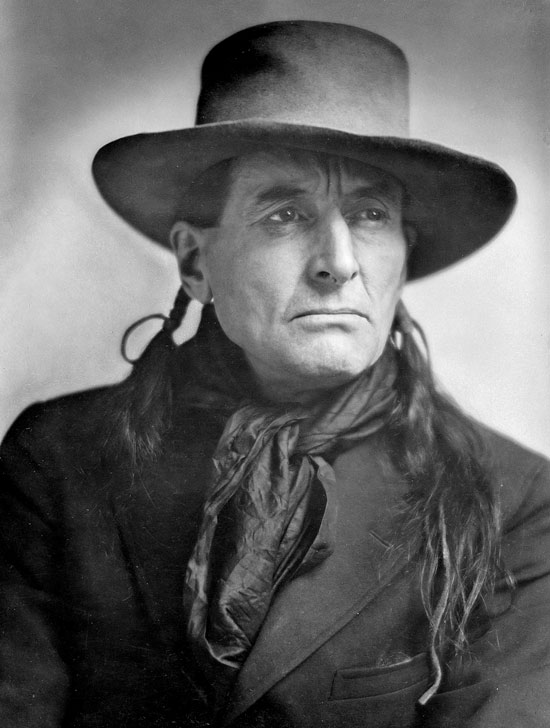 Archibald Belaney, better known as Grey Owl[/caption]
Born in the British seaside town of Hastings in 1888, Belaney would eventually become one of the most powerful spokespersons for the preservation of a pristine wilderness and a strong Native identity in Canada. From childhood he held a fascination for the Native peoples of North America, and at the age of seventeen Belaney left England for Canada. However, it was not until he was in his forties that Belaney began his career as the conservationist for which he is best known today.
After immersing himself in the culture and surroundings of the Native people, Belaney became deeply disturbed by what he perceived as the destruction of the Native way of life due to the loss of territory and the influence of white culture.
"Modern influences have taken away much of the romance, picturesque appearance from Indian camps," Belaney would write. "Their racial pride has been sapped and, destitute and hopeless, they no longer have the ambition to keep up the old methods and traditions, and national character is falling into decay."
This awakening also came at a time when many great Canadian forests were steadily being destroyed. With increasing demand for pelts and lumber, along with a growing railway system, the once-untouched Canadian wilderness was quickly becoming a common destination for trappers and loggers, and a pattern soon emerged. Once the trappers had rid a region of its wildlife, the loggers would then move in and cut down the trees; in the dried-out bush that remained, fire would often burn down what was left. While Natives had been able to live off the land for centuries without changing it, whites, apparently, could only make a living from the forest by destroying it.
Archibald Belaney, better known as Grey Owl[/caption]
Born in the British seaside town of Hastings in 1888, Belaney would eventually become one of the most powerful spokespersons for the preservation of a pristine wilderness and a strong Native identity in Canada. From childhood he held a fascination for the Native peoples of North America, and at the age of seventeen Belaney left England for Canada. However, it was not until he was in his forties that Belaney began his career as the conservationist for which he is best known today.
After immersing himself in the culture and surroundings of the Native people, Belaney became deeply disturbed by what he perceived as the destruction of the Native way of life due to the loss of territory and the influence of white culture.
"Modern influences have taken away much of the romance, picturesque appearance from Indian camps," Belaney would write. "Their racial pride has been sapped and, destitute and hopeless, they no longer have the ambition to keep up the old methods and traditions, and national character is falling into decay."
This awakening also came at a time when many great Canadian forests were steadily being destroyed. With increasing demand for pelts and lumber, along with a growing railway system, the once-untouched Canadian wilderness was quickly becoming a common destination for trappers and loggers, and a pattern soon emerged. Once the trappers had rid a region of its wildlife, the loggers would then move in and cut down the trees; in the dried-out bush that remained, fire would often burn down what was left. While Natives had been able to live off the land for centuries without changing it, whites, apparently, could only make a living from the forest by destroying it.
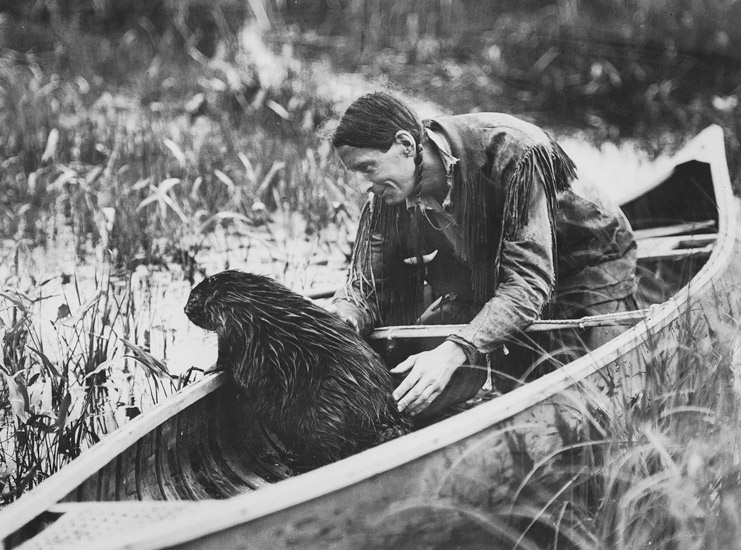 With his latest trip to Canada, Ray wished to experience first-hand the landscape and Anishinaabe First Nations culture that so greatly influenced Belaney.
"Grey Owl was the most effective conservationist of his age; he preached a message of concern on behalf of the creatures of the wild that he found suffering in the advancing tide of industrialisation, with its pollution and callous destruction of habitat. He seemed to be too good to be true; a half-breed Native, capable of describing his wilderness experiences with perfect prose.
"His books were best-sellers and his audience grew to span the world, including Kings and Princesses. On lecture tours he inspired thousands, including two boys with the surname Attenborough, who would themselves grow to become leading filmmakers and naturalists. But on his death it was revealed that Grey Owl, Wa-Sha-Quon-Asin was not a Native at all, but in fact an Englishman who had travelled to Canada to live out a boyhood dream.
"His real name was Archie Belaney, and his transformation into Grey Owl is one of the most fascinating human stories I have ever encountered. To have even the slightest chance to see beyond his accepted biography, one must walk for a while in his moccasins and encounter the lore and wisdom of the Anishinaabe First Nations and travel in the Ontario Wilderness. It is hard to imagine anyone with an open mind not being changed by this experience.
"The real joy of Grey Owl is the fact that he never betrayed the First Nations who so welcomed him. He never spoke of the ceremonies he had experienced, and in presenting his noble savage persona always claimed payment from his audience by making them think deeply about human influence on nature. In short, he was a hundred years ahead of his time. Even today, no popular naturalist has been able to enthral an audience while also explaining the negative impact of human society on wild lands in the way that he did." - Ray Mears
[caption id="attachment_7244" align="alignnone" width="644"]
With his latest trip to Canada, Ray wished to experience first-hand the landscape and Anishinaabe First Nations culture that so greatly influenced Belaney.
"Grey Owl was the most effective conservationist of his age; he preached a message of concern on behalf of the creatures of the wild that he found suffering in the advancing tide of industrialisation, with its pollution and callous destruction of habitat. He seemed to be too good to be true; a half-breed Native, capable of describing his wilderness experiences with perfect prose.
"His books were best-sellers and his audience grew to span the world, including Kings and Princesses. On lecture tours he inspired thousands, including two boys with the surname Attenborough, who would themselves grow to become leading filmmakers and naturalists. But on his death it was revealed that Grey Owl, Wa-Sha-Quon-Asin was not a Native at all, but in fact an Englishman who had travelled to Canada to live out a boyhood dream.
"His real name was Archie Belaney, and his transformation into Grey Owl is one of the most fascinating human stories I have ever encountered. To have even the slightest chance to see beyond his accepted biography, one must walk for a while in his moccasins and encounter the lore and wisdom of the Anishinaabe First Nations and travel in the Ontario Wilderness. It is hard to imagine anyone with an open mind not being changed by this experience.
"The real joy of Grey Owl is the fact that he never betrayed the First Nations who so welcomed him. He never spoke of the ceremonies he had experienced, and in presenting his noble savage persona always claimed payment from his audience by making them think deeply about human influence on nature. In short, he was a hundred years ahead of his time. Even today, no popular naturalist has been able to enthral an audience while also explaining the negative impact of human society on wild lands in the way that he did." - Ray Mears
[caption id="attachment_7244" align="alignnone" width="644"]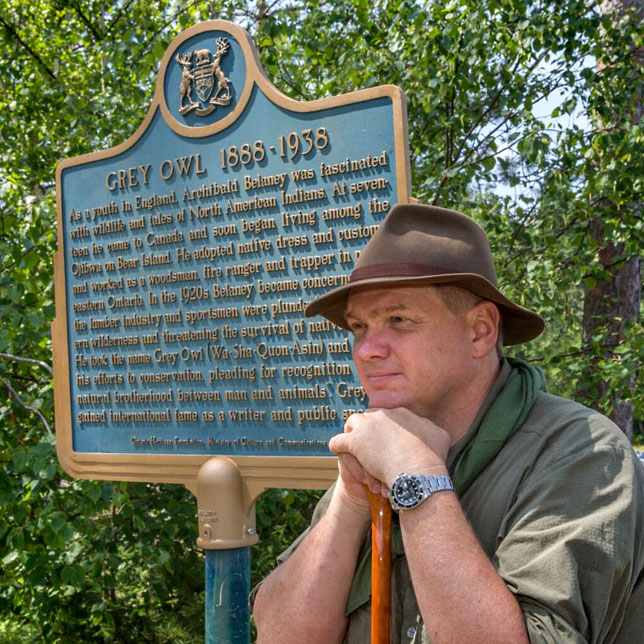 Ray visits the Grey Owl plaque in Finlayson Point Provincial Park in the Temagami region of Ontario, Canada[/caption]
This year, Ontario Tourism is offering one winner and their travelling companion the trip of a lifetime; the opportunity to walk in the footsteps of Grey Owl with Ray Mears as your guide. Taking place on 15 – 22nd July 2016, this journey will take you deep into the spectacular back-country of the Temagami region, where you will be immersed in Canada’s canoe culture and the story of Grey Owl. For more information on how to how to enter this competition, please click here.
For more information on the life of Grey Owl, we recommend visiting this article.
Ray visits the Grey Owl plaque in Finlayson Point Provincial Park in the Temagami region of Ontario, Canada[/caption]
This year, Ontario Tourism is offering one winner and their travelling companion the trip of a lifetime; the opportunity to walk in the footsteps of Grey Owl with Ray Mears as your guide. Taking place on 15 – 22nd July 2016, this journey will take you deep into the spectacular back-country of the Temagami region, where you will be immersed in Canada’s canoe culture and the story of Grey Owl. For more information on how to how to enter this competition, please click here.
For more information on the life of Grey Owl, we recommend visiting this article.
Archibald Belaney, better known as Grey Owl[/caption]
Born in the British seaside town of Hastings in 1888, Belaney would eventually become one of the most powerful spokespersons for the preservation of a pristine wilderness and a strong Native identity in Canada. From childhood he held a fascination for the Native peoples of North America, and at the age of seventeen Belaney left England for Canada. However, it was not until he was in his forties that Belaney began his career as the conservationist for which he is best known today.
After immersing himself in the culture and surroundings of the Native people, Belaney became deeply disturbed by what he perceived as the destruction of the Native way of life due to the loss of territory and the influence of white culture.
"Modern influences have taken away much of the romance, picturesque appearance from Indian camps," Belaney would write. "Their racial pride has been sapped and, destitute and hopeless, they no longer have the ambition to keep up the old methods and traditions, and national character is falling into decay."
This awakening also came at a time when many great Canadian forests were steadily being destroyed. With increasing demand for pelts and lumber, along with a growing railway system, the once-untouched Canadian wilderness was quickly becoming a common destination for trappers and loggers, and a pattern soon emerged. Once the trappers had rid a region of its wildlife, the loggers would then move in and cut down the trees; in the dried-out bush that remained, fire would often burn down what was left. While Natives had been able to live off the land for centuries without changing it, whites, apparently, could only make a living from the forest by destroying it.
With his latest trip to Canada, Ray wished to experience first-hand the landscape and Anishinaabe First Nations culture that so greatly influenced Belaney.
"Grey Owl was the most effective conservationist of his age; he preached a message of concern on behalf of the creatures of the wild that he found suffering in the advancing tide of industrialisation, with its pollution and callous destruction of habitat. He seemed to be too good to be true; a half-breed Native, capable of describing his wilderness experiences with perfect prose.
"His books were best-sellers and his audience grew to span the world, including Kings and Princesses. On lecture tours he inspired thousands, including two boys with the surname Attenborough, who would themselves grow to become leading filmmakers and naturalists. But on his death it was revealed that Grey Owl, Wa-Sha-Quon-Asin was not a Native at all, but in fact an Englishman who had travelled to Canada to live out a boyhood dream.
"His real name was Archie Belaney, and his transformation into Grey Owl is one of the most fascinating human stories I have ever encountered. To have even the slightest chance to see beyond his accepted biography, one must walk for a while in his moccasins and encounter the lore and wisdom of the Anishinaabe First Nations and travel in the Ontario Wilderness. It is hard to imagine anyone with an open mind not being changed by this experience.
"The real joy of Grey Owl is the fact that he never betrayed the First Nations who so welcomed him. He never spoke of the ceremonies he had experienced, and in presenting his noble savage persona always claimed payment from his audience by making them think deeply about human influence on nature. In short, he was a hundred years ahead of his time. Even today, no popular naturalist has been able to enthral an audience while also explaining the negative impact of human society on wild lands in the way that he did." - Ray Mears
[caption id="attachment_7244" align="alignnone" width="644"] Ray visits the Grey Owl plaque in Finlayson Point Provincial Park in the Temagami region of Ontario, Canada[/caption]
This year, Ontario Tourism is offering one winner and their travelling companion the trip of a lifetime; the opportunity to walk in the footsteps of Grey Owl with Ray Mears as your guide. Taking place on 15 – 22nd July 2016, this journey will take you deep into the spectacular back-country of the Temagami region, where you will be immersed in Canada’s canoe culture and the story of Grey Owl. For more information on how to how to enter this competition, please click here.
For more information on the life of Grey Owl, we recommend visiting this article.


